
Goods and Services Tax in Tally Prime
✅ Purchase Account | Sales Account | Duties & Taxes
Goods and Services Tax (GST) is the value-added tax levied on almost all goods sold for domestic consumption and services we use within the country. It is a single tax structure removing all the previous central and state taxes. GST is actually paid by the customers who avail the service or the goods they buy, but it is remitted to the government by businesses houses and companies.
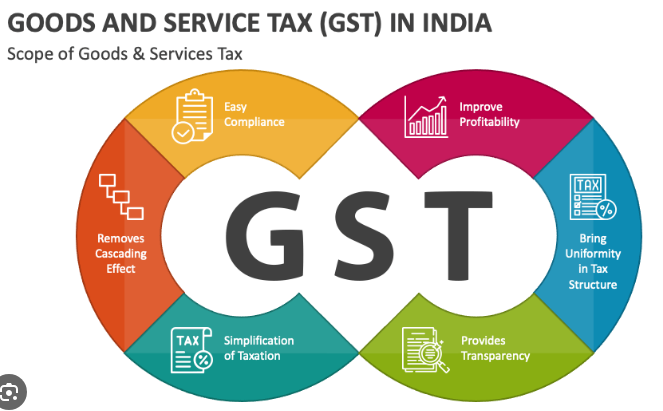
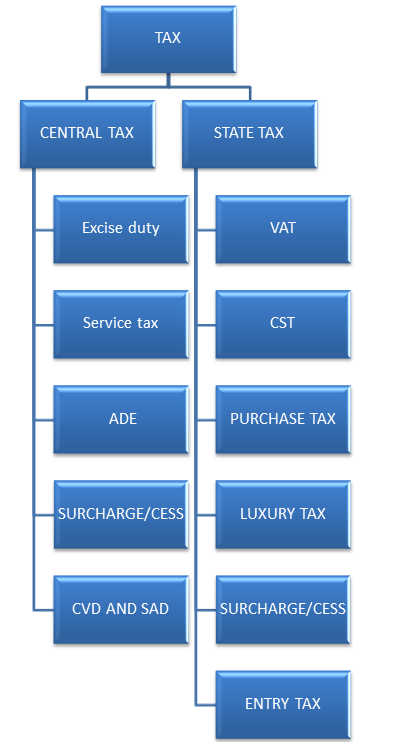
GST is the final outcome after merging all the central taxes (Excise duty, sales tax, service tax, surcharges and cesses) and state taxes (State VAT/ sales tax, Purchase tax, Luxury tax, entertainment tax, sin tax, etc.) and made into a single tax under the slogan “One Nation, One Tax”.
FORMER TAX STRUCURE
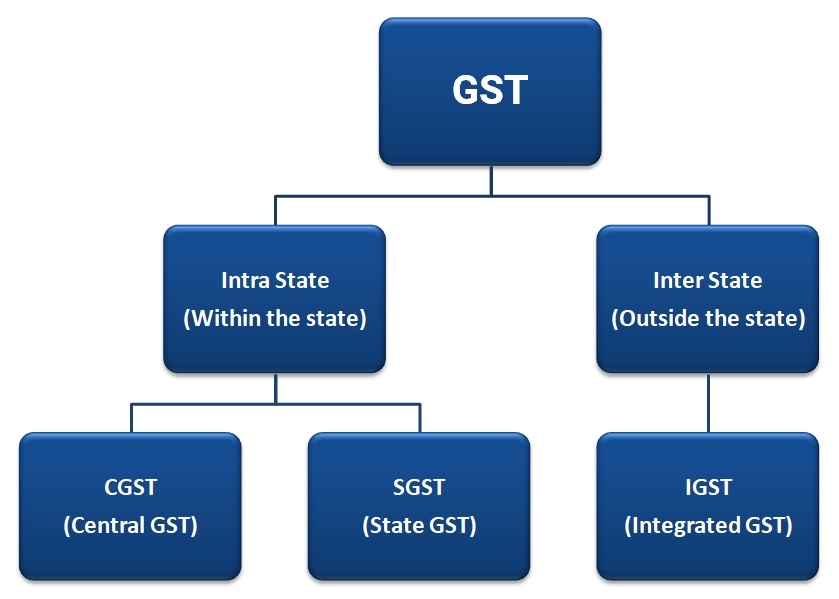
NEW TAX STRUCTURE
Key Point:
The “One Nation, One Tax” Concept
GST represents the final outcome of merging various indirect taxes into a single unified structure.
Central Taxes Merged into GST
- Excise Duty
- Service Tax
- Central Sales Tax (CST)
- Surcharges
- Cesses
State Taxes Merged into GST
- State VAT
- Purchase Tax
- Luxury Tax
- Entertainment Tax
- Entry Tax
GST in Tally Prime – Accounting Impact
In Tally Prime, GST mainly affects the following ledger groups:
- Purchase Account – Records inward supply of goods/services.
- Sales Account – Records outward supply of goods/services.
- Duties & Taxes – Used to create CGST, SGST, IGST ledgers.
If you purchase goods worth ₹10,000 with 18% GST:
Purchase A/c – ₹10,000
Input CGST – ₹900
Input SGST – ₹900
Supplier – ₹11,800
GST collected on sales is called Output GST.
GST paid on purchases is called Input GST.
Net GST payable = Output GST – Input GST.