
Addition Operator
Addition uses the + symbol in Excel, and is also known as plus.
There are two ways to do addition in Excel. Either by using the + symbol in a formula or by using the SUM function.
How to add cells:
- Select a cell and type (
=) - Select a cell
- Type (
+) - Select another cell
- Hit enter
You can add more cells to the formula by typing (+) between the cells.
Let’s have a look at some examples.
Adding Two Manual Entries
- Type
A1(=) - Type
5+5 - Hit enter
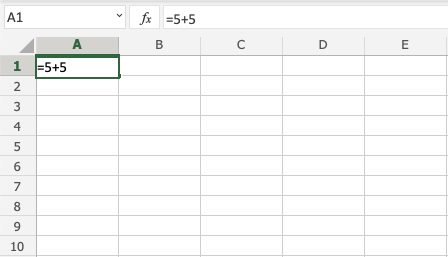
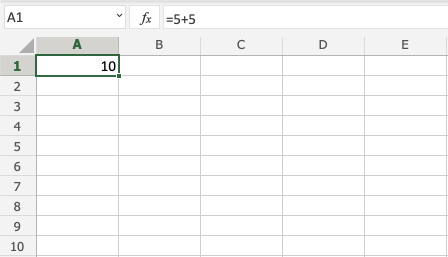
Congratulations! You have successfully added 5+5=10.
Adding Two Cells
First let’s add some numbers to work with. Type the following values:
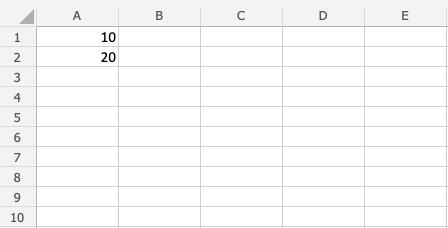
How to do it, step by step:
- Type
B1(=) - Select
A1 - Type (
+) - Select
A2 - Hit enter
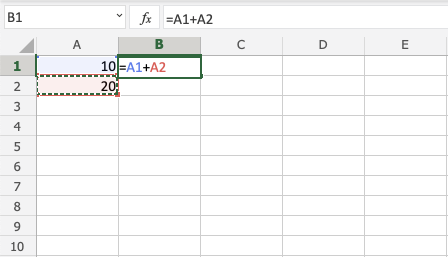
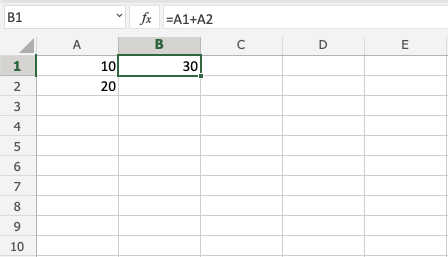
Great! 30 is the result by adding A1 and A2.
Adding Several Cells
First let’s add some numbers to work with. Type the following values:
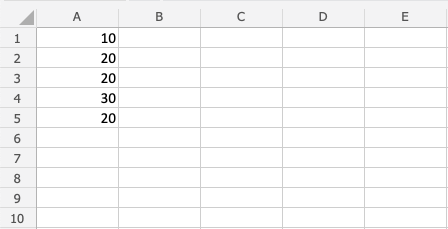
Step by step to add several cells:
- Type
B1(=) - Select
A1 - Type (
+) - Select
A2 - Type (
+) - Select
A3 - Type (
+) - Select
A4 - Type (
+) - Select
A5 - Hit enter
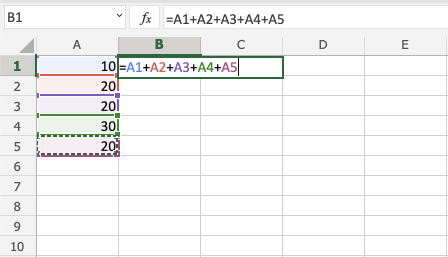
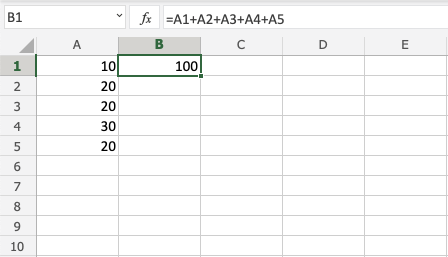
Good job! You have successfully added five cells!
Adding with SUM
Let’s keep the numbers from the last exercise. If you did last exercise, remove the value in B1.
Step by step to add with SUM:
- Type
B1(=SUM) - Double click the
SUMcommand - Mark the range
A1:A5 - Hit enter
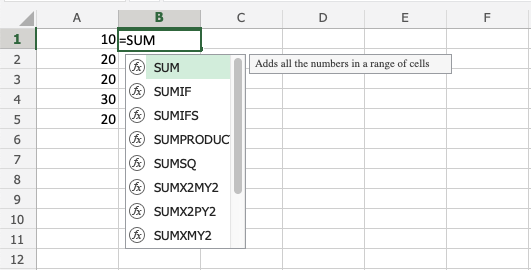
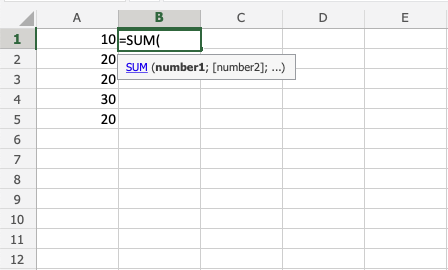
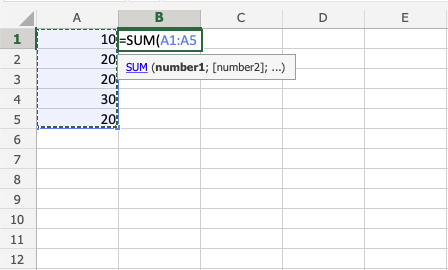
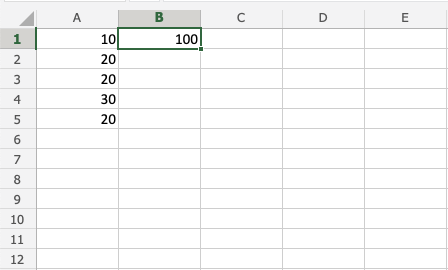
Note: SUM saves you time! Keep practicing this function.
Adding Using Absolute Reference
You can also lock a cell and add it to other cells.
How to do it, step by step:
- Select a cell and type (
=) - Select the cell you want to lock, add two dollar signs (
$) before the column and row - Type (
+) - Fill a range
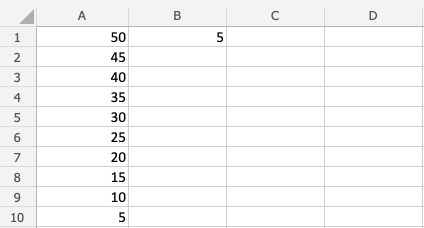
Let’s have a look at an example where we add B(5) to the range A1:A10 using absolute reference and the fill function.
Type the values:
Step by step:
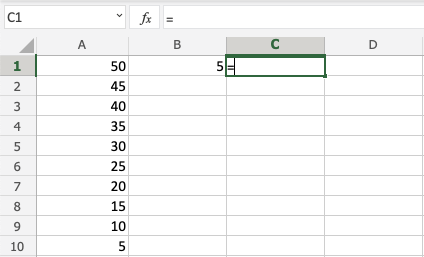
- Type
C1(=) - Select
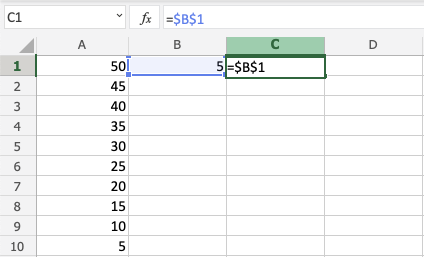
B1 - Type dollar sign before column and row
$B$1 - Type (
+) - Select
A1 - Hit enter
- Fill the range
C1:C10
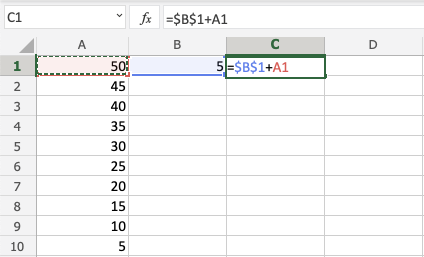
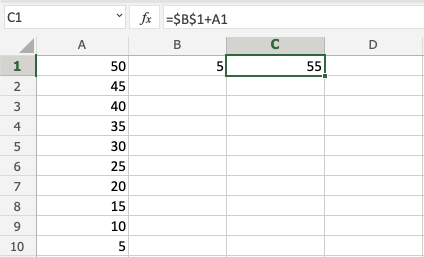
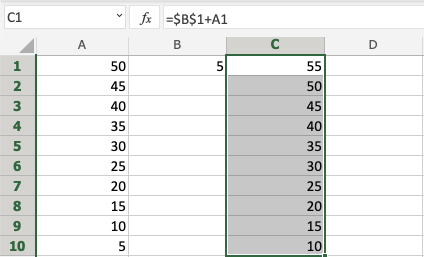
Great! You have successfully used absolute reference to add B1(5) with the range A1:A10.
Excel Subtraction Operator
Subtraction Operator
Subtraction uses the - symbol, and is also known as minus.
How to subtract cells:
- Select a cell and type (
=) - Select the minuend
- Type (
-) - Select the subtrahend
- Hit enter
Note: The minuend is the number to which the subtrahend subtracts from.
You can add more cells to the formula by typing (-) between the cells.
Let’s have a look at some examples.
Subtracting Two Manual Entries
Let’s start with adding in a formula. Start with a clean sheet
Step by step:
- Type
A1(=) - Type
100-50 - Hit enter
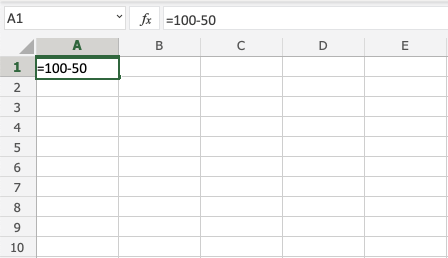
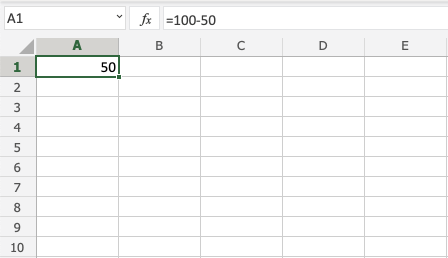
Tip: You can add more values into the formula by typing (-) between the cells.
Subtracting Using Two Cells
Let’s add some numbers to work with. Type the following values:
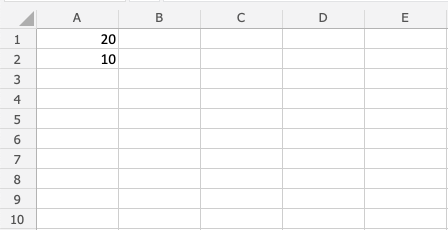
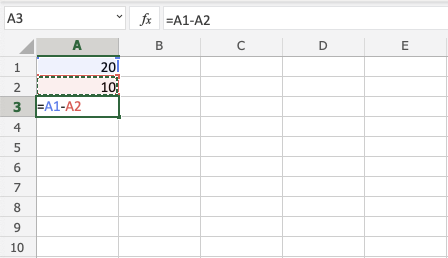
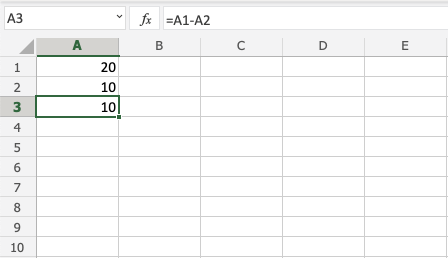
Subtracting using two cells, step by step:
- Type
A3(=) - Select
A1 - Type (
-) - Select
A2 - Hit enter
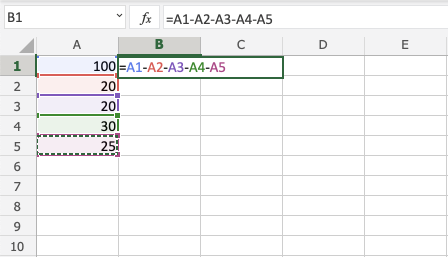
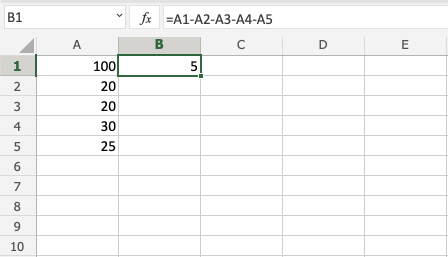
Subtracting Using Many Cells
Let’s subtract using many cells. First, type the following values:
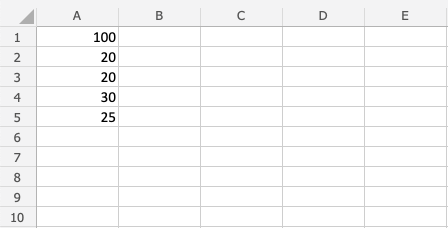
Step by step:
- Type
B1(=) - Select
A1 - Type (
-) - Select
A2 - Type (
-) - Select
A3 - Type (
-) - Select
A4 - Type (
-) - Select
A5 - Hit enter
Subtracting Using Absolute Reference
You can lock a cell and subtract it from other cells.
How to do it, step by step:
- Select a cell and type (
=) - Select the minuend
- Type (
-) - Select the subtrahend and add two dollar signs (
$) before the column and row - Hit enter
- Fill the range
Note: The minuend is the number to which the subtrahend subtracts from.
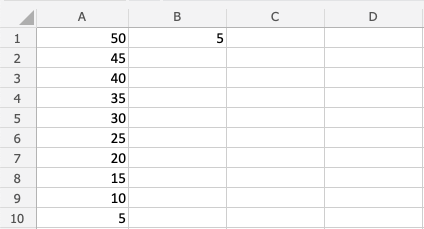
Let’s have a look at an example where we subtract B(5) from the range A1:A10 using absolute reference and fill function.
Type the values:
Step by step:
- Type
C1(=) - Select
A1 - Type (
-) - Select
B1and type dollar sign before column and row$B$1 - Hit enter
- Fill
C1:C10
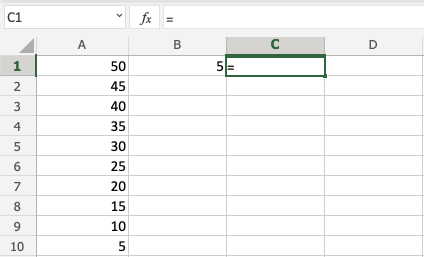
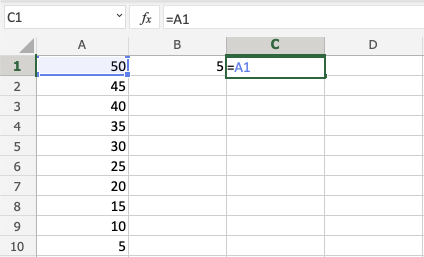
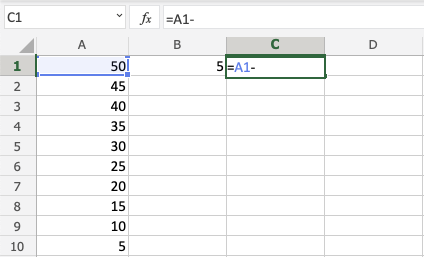
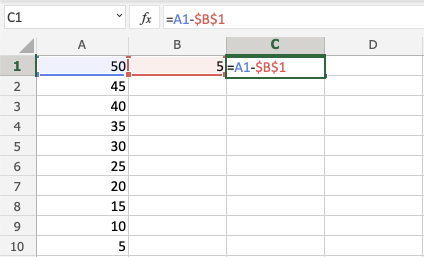
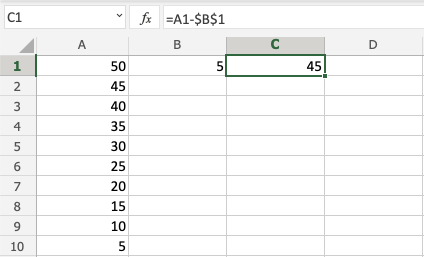
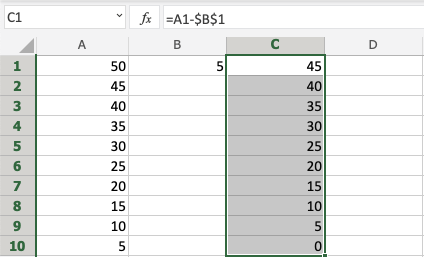
You got it! You have successfully used absolute reference to subtract B1(5) from the minuend range A1:A10.
Excel Multiplication Operator
Multiplication Operator
Multiplication uses the * symbol in Excel.
How to multiply cells:
- Select a cell and type (
=) - Select a cell
- Type (
*) - Select another cell
- Hit enter
You can add more cells to formula by typing (*) between the cells.
Let’s have a look at some examples.
Multiplying Manual Entries
Let’s start with adding in a formula. Start with a clean sheet.
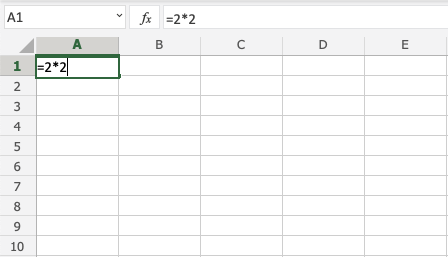
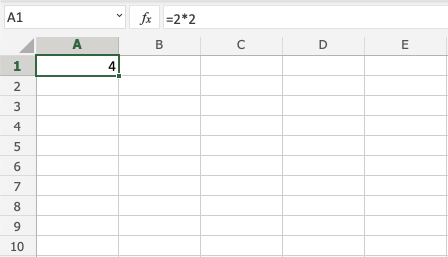
Step by step:
- Type
A1(=) - Type
2*2 - Hit enter
Multiplying Two Cells
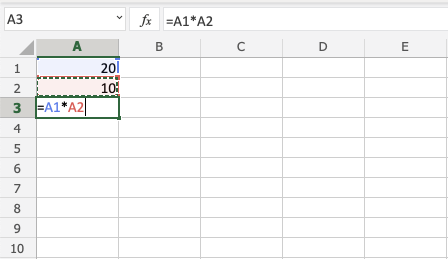
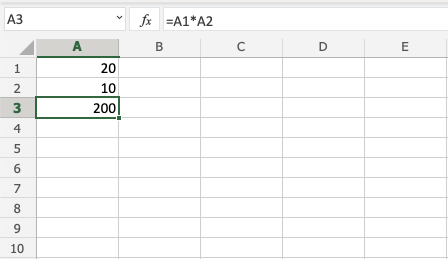
Let’s add some numbers to work with. Type the following values:
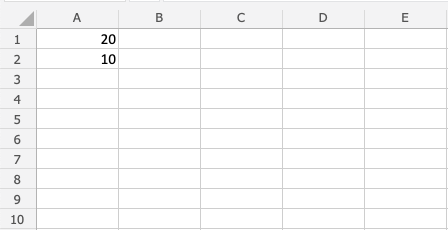
Step by step:
- Type
A3(=) - Select
A1 - Type (
*) - Select
A2 - Hit enter
Multiplying Using Absolute Reference
You can lock a cell and multiply it with other cells.
How to do it, step by step:
- Select a cell and type (
=) - Select the cell you want to lock and add two dollar signs (
$) before the column and row - Type (
*) - Select another cell
- Hit enter
- Fill the range
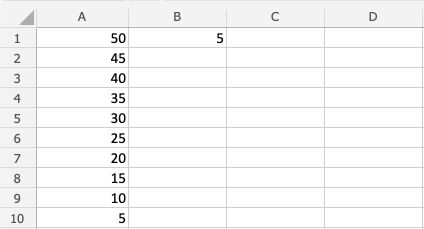
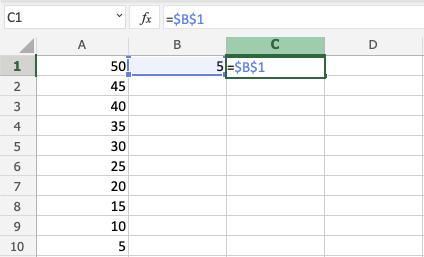
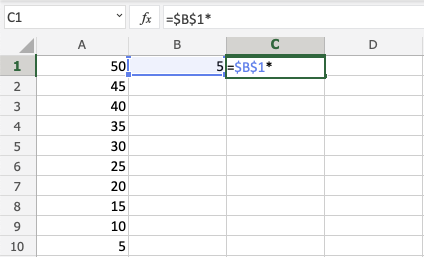
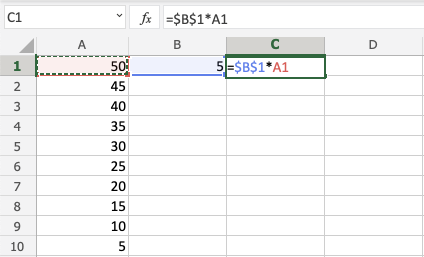
Let’s have a look at an example where we multiply B(5) with the range A1:A10 using absolute reference and the fill function.
Type the values:
Step by step:
- Type
C1(=) - Select
B1type dollar sign before column and row$B$1 - Type (
*) - Select
A1 - Hit enter
- Fill
C1:C10
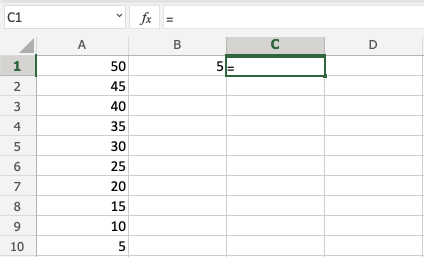
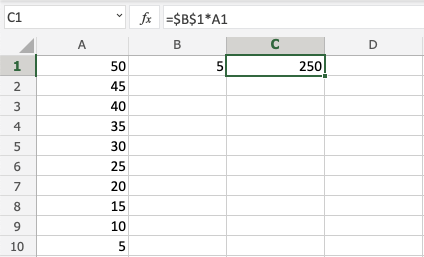
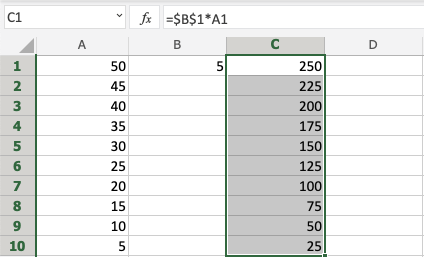
You got it! You have successfully used absolute reference to multiply B1(5) with the range A1:A10.
Excel Division Operator
Division Operator
Division uses the / symbol in Excel.
How to do division cells:
- Select a cell and type (
=) - Select a cell
- Type (
/) - Select another cell
- Hit enter
You can add more cells to the formula by typing (/) between the cells.
Let’s have a look at some examples.
Dividing Manual Entries
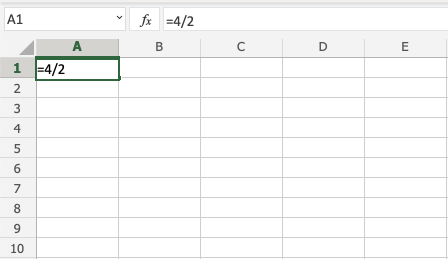
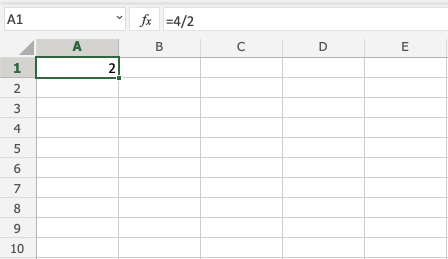
Let’s start with adding in a formula. Start with a clean sheet.
Step by step:
- Type
A1(=) - Type
4/2 - Hit enter
Dividing Two Cells
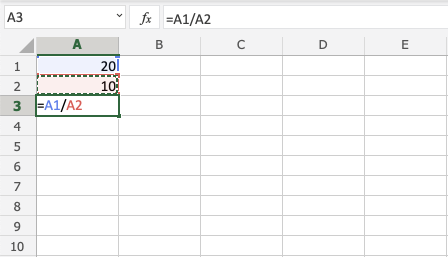
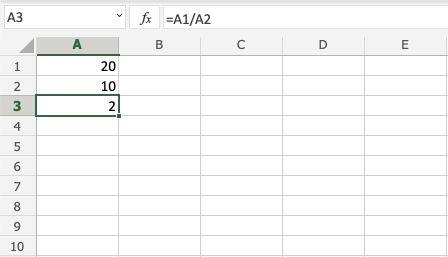
Let’s add some numbers to work with. Type the following values:
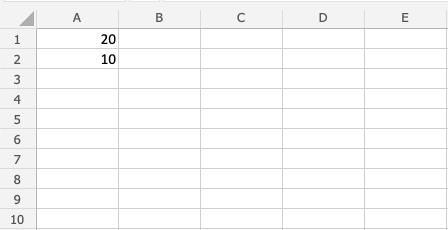
Step by step:
- Type
A3(=) - Select
A1 - Type (
/) - Select
A2 - Hit enter
Dividing Using Absolute Reference
You can lock a cell and divide it with other cells.
How to do it, step by step:
- Select a cell and type (
=) - Select the dividend
- Type (
/) - Select the divisor lock and add two dollar signs (
$) before the column and row - Hit enter
- Fill the range
Note: Dividend is the number being divided by the divisor.
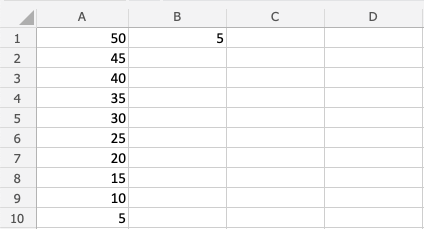
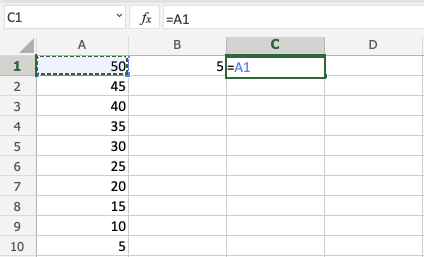
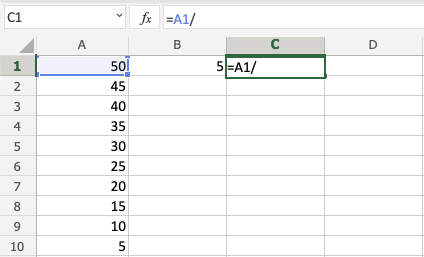
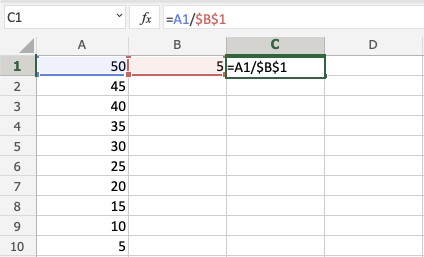
Let’s have a look at an example where we divide B(5) with the range A1:A10 using absolute reference and fill function.
Type the values:
Step by step:
- Type
C1(=) - Select
A1 - Type (
/) - Select
B1type dollar sign before column and row$B$1 - Hit enter
- Fill
C1:C10
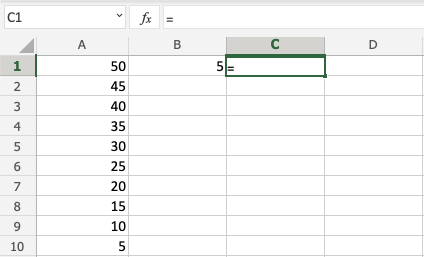
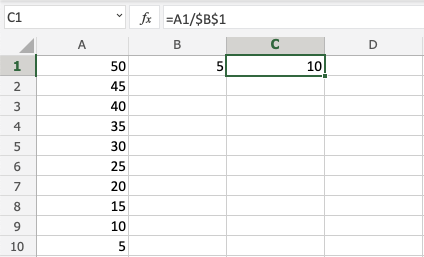
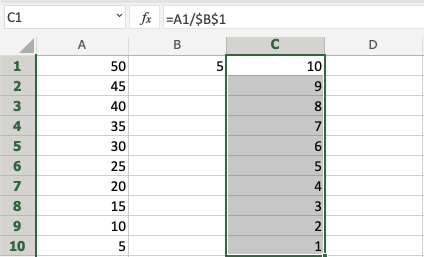
Goob job! You have successfully used absolute reference to divide B1(5) with the range A1:A10.