
What are GST Rates in india
📊 What are GST Rates?
Goods and Services Tax (GST) is one of the biggest tax reforms in India. It brought uniformity in taxation of various commodities and services across the country and helped eliminate the cascading effect (tax on tax) of earlier indirect taxes.
Although GST is a single taxation system, different goods and services are placed under different GST slabs (tax rates) depending on their nature and importance.
📌 GST Rate Structure (GST Slabs)
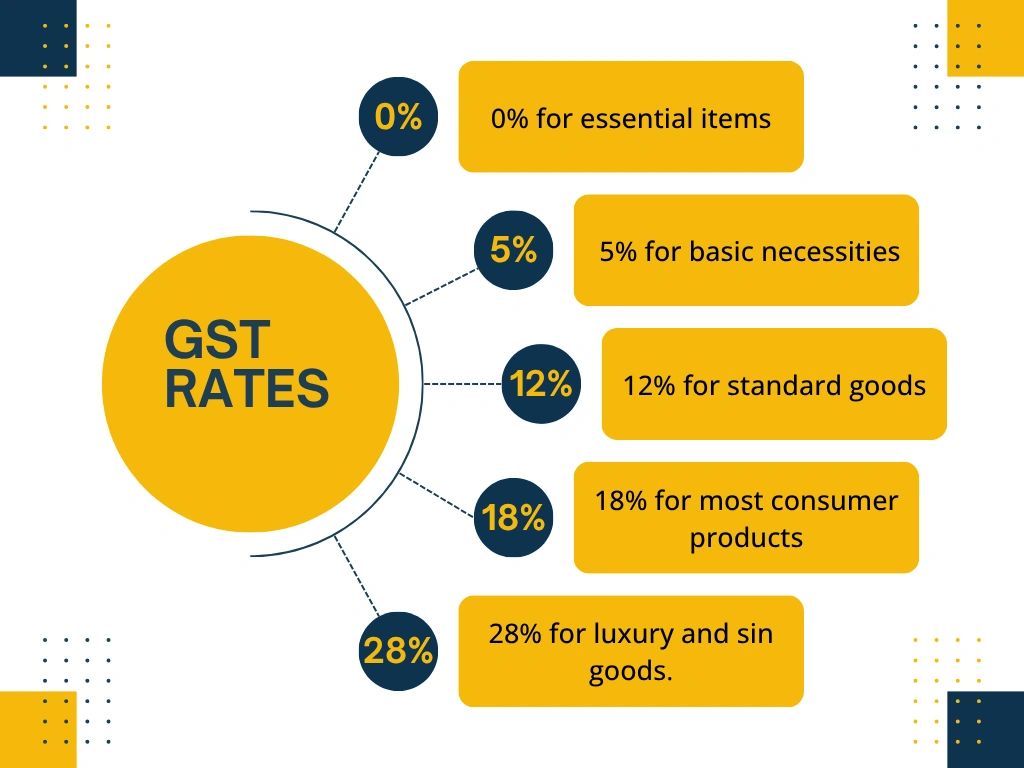
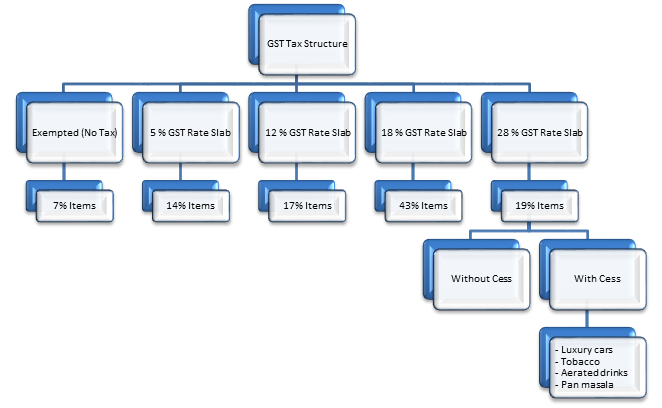
The GST rates are divided into 5 major slabs:
- NIL (0%) – No GST is charged on essential goods and services.
- 5% – Basic necessity goods fall under this slab.
- 12% – Standard rate for certain goods and services.
- 18% – Most commonly applied GST rate.
- 28% – Applied on luxury goods and selected items.
💍 Special GST Rate
Gold and other precious metals such as Silver and Platinum are not exempt, but they are taxed at a concessional GST rate of 3% under specific HSN codes.
🔄 Changes in GST Rates
Till date, multiple GST Council meetings have been conducted where tax rates were revised.
- Some goods shifted from 28% to 18%.
- Some goods moved from NIL to 5%.
- Rates were reduced on many essential commodities.
🎯 Purpose of Multiple GST Slabs
- To protect essential goods from high taxation
- To maintain economic balance
- To tax luxury goods at higher rates
- To ensure fair taxation system
🧠 Summary
GST in India follows a multi-slab structure (0%, 5%, 12%, 18%, 28%) to categorize goods and services based on necessity and usage. Special items like gold are taxed at 3%. GST rates are periodically revised by the GST Council to maintain economic stability.